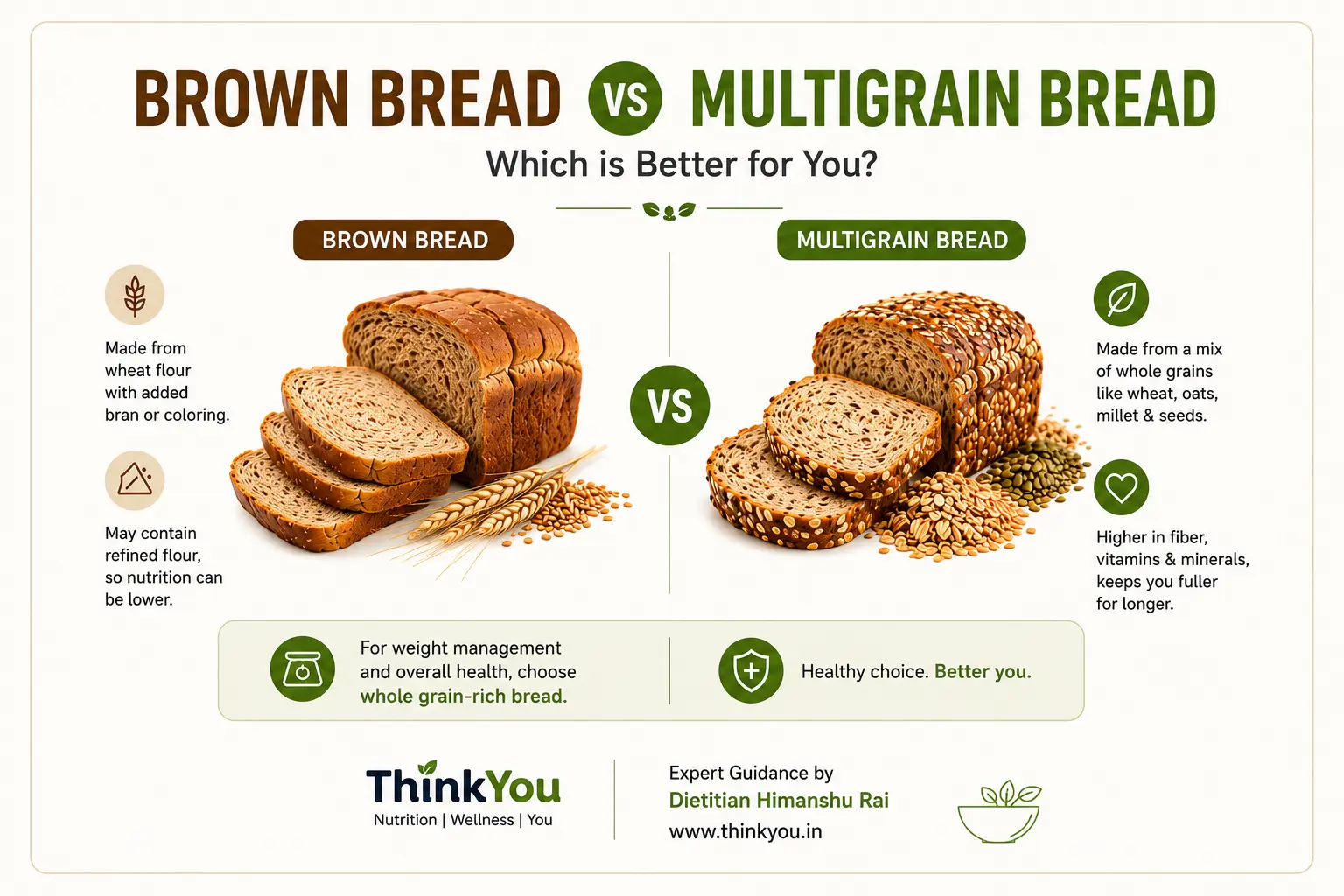
Brown Bread vs Multigrain Bread: Which is Better for Weight Loss and Overall Health?
Bread is a common part of many Indian diets. However, when people begin focusing on weight loss, diabetes management, or healthier eating habits, one question often arises: should you choose brown bread or multigrain bread? Although both are marketed as healthy alternatives to white bread, their nutritional value can differ significantly. At ThinkYou, Dietitian Himanshu Rai helps individuals make informed dietary choices based on scientific evidence and practical nutrition strategies.
What is Brown Bread?
Brown bread is usually made from wheat flour and may contain added bran to increase fiber content. However, many commercial brown breads are not made entirely from whole wheat flour. Some products contain refined flour along with coloring agents that create a brown appearance. This means that the nutritional quality of brown bread can vary widely depending on the brand and ingredients used. Consumers should always check ingredient labels rather than relying solely on packaging claims.
What is Multigrain Bread?
Multigrain bread is prepared using a combination of grains such as wheat, oats, barley, millet, flaxseeds, and other grains or seeds. The presence of multiple grains can increase the diversity of nutrients in the bread. When made from whole grains, multigrain bread often provides more fiber, vitamins, minerals, and plant-based nutrients compared to many conventional brown breads. The health benefits depend largely on whether the grains are whole or refined. Therefore, reading the ingredient list remains essential.
Brown Bread vs Multigrain Bread: Which is Better?
When comparing brown bread and multigrain bread, there is no single answer that applies to every product. A high-quality brown bread made from whole wheat may be healthier than a multigrain bread made primarily from refined flour. However, in general, multigrain bread made from whole grains tends to offer greater nutritional variety and better fiber content. Higher fiber intake may support digestive health, improve satiety, assist with blood sugar control, and contribute to better weight management. These factors make whole-grain multigrain bread a preferred choice for many health-conscious individuals.
Which Bread is Better for Weight Loss?
Weight loss depends on overall calorie balance, dietary quality, physical activity, and lifestyle habits. Choosing bread that contains more fiber and whole grains can help improve fullness and reduce unnecessary snacking between meals. For this reason, whole-grain multigrain bread is often considered a better option for weight management. However, portion control and overall dietary patterns remain equally important. Personalized nutrition guidance from the Best Dietitian in Delhi and Best Nutritionist in Delhi can help individuals make choices that align with their specific goals and health conditions.
Expert Advice from ThinkYou
Selecting the right bread is only one aspect of healthy eating. Sustainable health improvements require an individualized approach that considers age, medical history, lifestyle, food preferences, and nutrition goals. At ThinkYou, Dietitian Himanshu Rai provides evidence-based nutrition counseling for weight loss, diabetes management, PCOS, heart health, and overall wellness. Individuals searching for the Best Dietitian in Delhi or the Best Nutritionist in Delhi can benefit from customized nutrition plans designed for long-term success. Website: www.thinkyou.in. Author: Dietitian Himanshu Rai. Scientific References:: ttps://www.who.int. https://www.icmr.gov.in. https://nutritionsource.hsph.harvard.edu. https://www.cdc.gov. SEO Keywords: Brown Bread vs Multigrain Bread, Best Dietitian in Delhi, Best Nutritionist in Delhi, Weight Loss Diet Delhi, Healthy Bread India, Whole Grain Bread, Multigrain Bread Benefits, Brown Bread Benefits, Dietitian Himanshu Rai, ThinkYou, Diabetes Diet India, Weight Loss Expert Delhi, Healthy Eating Delhi, Nutrition Counseling Delhi.
DISCLAIMER
This article is for educational purposes only and should not be considered medical advice. Nutritional requirements vary among individuals. Consult a qualified healthcare professional or registered dietitian before making significant dietary changes.