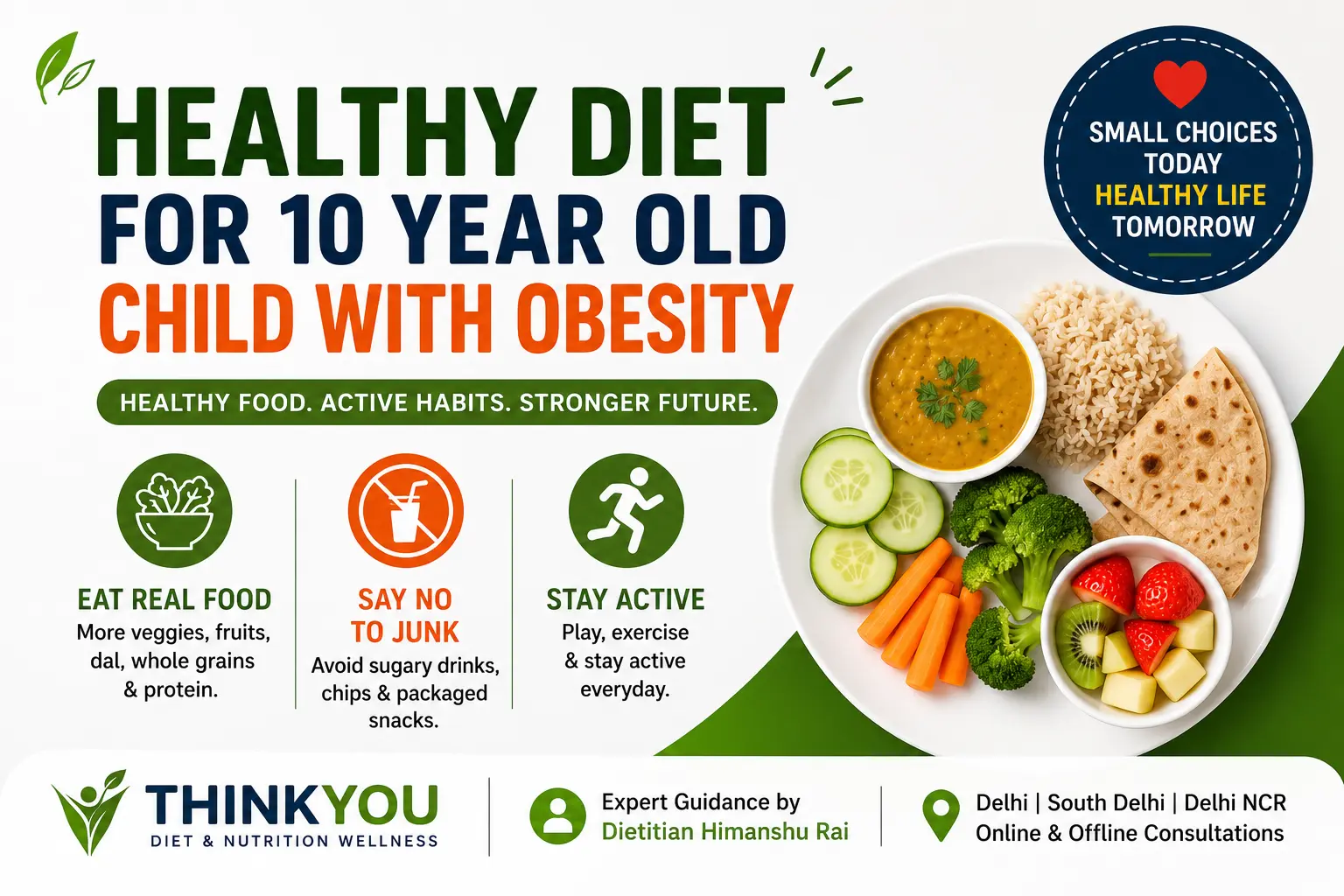
Healthy Diet for Ten-Year-Old Child | Best Dietitian in Delhi
Childhood obesity needs a different nutritional approach from adult weight loss. A growing child requires adequate protein, carbohydrates, healthy fats, vitamins and minerals for physical growth, brain development and everyday activities. Parents should therefore avoid crash diets, prolonged fasting, detox diets or unnecessary food restriction. The objective should be to improve eating habits, physical activity and overall lifestyle while supporting healthy growth. For a ten-year-old child with excess weight, a healthy approach generally focuses on nutritious foods, appropriate portions, regular meals, physical activity, adequate sleep and supportive family habits rather than rapid weight loss. Parents searching for the best dietitian in Delhi or best nutritionist in Delhi for childhood obesity should seek individualized guidance based on the child's growth pattern, eating habits, lifestyle, food preferences and medical needs.
Healthy Indian Foods for Childhood Obesity Traditional Indian foods can form the foundation of a nut
Traditional Indian foods can form the foundation of a nutritious eating pattern for children. Breakfast choices can include vegetable poha, vegetable upma, besan chilla, moong dal chilla, paneer with roti, oats with milk or eggs with whole-grain roti. Sugary cereals, sweetened drinks and highly processed breakfast foods should be occasional rather than everyday choices. Lunch and dinner can include vegetables combined with dal, rajma, chana, lobia, curd, paneer, eggs, fish or other suitable protein sources. Roti and rice do not necessarily need to be eliminated. Portion awareness and overall meal quality are more important than unnecessarily banning common staple foods. Whole fruits such as guava, apple, orange, papaya and seasonal fruits are preferable to routinely consuming sugary drinks or sweetened fruit beverages. For snacks, parents can consider roasted chana, homemade sprouts preparations, fruit with unsweetened curd, minimally prepared makhana or other nutritious home-cooked options. Children should be encouraged to recognize natural hunger and fullness signals instead of being forced to finish everything on their plate.
Foods and Habits Parents Should Limit
Regular consumption of soft drinks, sugary beverages, packaged juices, candies, pastries, cakes, chips, fried snacks, fast foods and highly processed foods can contribute substantial calories while providing limited nutritional value. Eating habits also matter. Frequent eating while watching television, gaming or using a smartphone may encourage distracted eating. Family meals at the dining table can create a healthier eating environment. Parents should avoid using food routinely as a reward or punishment. Body shaming, teasing or repeatedly criticizing a child's weight should also be avoided. Healthy lifestyle changes can be more sustainable when the entire family participates. Regular physical activity should accompany healthy eating. Outdoor games, cycling, swimming, dancing, sports and active play are practical options for school-aged children. Adequate sleep and limiting excessive sedentary screen time are also important parts of a healthy lifestyle.
THINKYOU Childhood Diet & Nutrition Support in Delhi
Parents searching online for a best dietitian in Delhi, best nutritionist in Delhi, child nutritionist in Delhi, childhood obesity dietitian in Delhi or dietitian for overweight children in Delhi NCR may benefit from individualized professional nutrition guidance. At THINKYOU, Dietitian Himanshu Rai focuses on practical nutrition strategies designed around a child's eating habits, food preferences, school schedule, family meals and lifestyle. Childhood obesity management should not simply focus on reducing the number shown on a weighing scale. The broader goal is to establish healthier habits while supporting growth and nutritional adequacy. A personalized nutrition approach may help families understand balanced Indian meals, portion awareness, healthier snacks, meal timing and sustainable lifestyle changes. Because childhood obesity can sometimes coexist with other health concerns, parents should also discuss their child's growth and weight status with a pediatrician. Appropriate medical assessment can determine whether further evaluation is required. Families in Delhi, South Delhi and Delhi NCR seeking professional childhood nutrition support can consider THINKYOU and Dietitian Himanshu Rai for individualized dietary and lifestyle guidance.
Scientific References
This information is based on general nutrition principles supported by authoritative public-health and pediatric organizations. World Health Organization — Childhood Overweight and Obesity https://www.who.int/news-room/questions-and-answers/item/noncommunicable-diseases-childhood-overweight-and-obesity World Health Organization — Healthy Diet https://www.who.int/news-room/fact-sheets/detail/healthy-diet World Health Organization — Physical Activity https://www.who.int/news-room/fact-sheets/detail/physical-activity American Academy of Pediatrics — Clinical Practice Guideline for the Evaluation and Treatment of Children and Adolescents With Obesity https://publications.aap.org/pediatrics/article/151/2/e2022060640/190443/Clinical-Practice-Guideline-for-the-Evaluation-and
Disclaimer
This article is for general educational and informational purposes only. It should not be considered medical advice, diagnosis, treatment or an individualized diet prescription. Nutritional requirements differ between children according to age, sex, height, weight, growth pattern, physical activity, medical history and other individual factors. Children should not be placed on restrictive calorie diets, crash diets, prolonged fasting or rapid weight-loss programs without appropriate professional supervision. Parents concerned about their child's weight, growth or health should consult a pediatrician and appropriately qualified nutrition professional before making significant dietary changes.